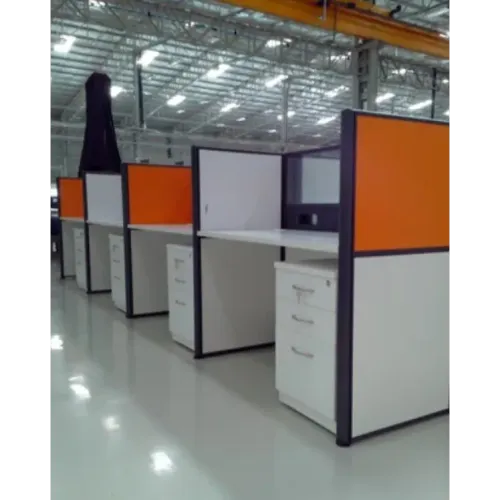
Industrial workstations operate in a different environment from ordinary office desks. They may support tools, instruments, components, inspection equipment, assembly activities, or repetitive production tasks. Choosing an Industrial Workstation Table therefore requires careful evaluation of how the table will actually be used.
For manufacturing and engineering businesses around Chakan, Pune, Maharashtra, functionality should take priority over selecting a table solely by standard dimensions or appearance.
Start With the Process
Define the activity that will happen at the workstation.
Will the operator assemble components, perform testing, handle tools, inspect parts, record information, or perform several tasks?
Understanding the process helps determine the required worktop size, height, accessories, storage, and structural configuration.
Consider the Expected Load
The table should be appropriate for the items it will support.
Instead of estimating, businesses should identify typical and maximum loads associated with equipment, components, fixtures, and tools. Requirements can then be discussed with the manufacturer before the table specification is finalised.
Ergonomics Matters in Industrial Areas
A strong table can still be uncomfortable if its working height is unsuitable.
Consider whether the operator will work while sitting, standing, or alternating between both positions. Frequently used tools and components should be positioned within practical reach wherever possible.
Repeated reaching, bending, or awkward positioning can make everyday tasks less efficient.
Think About Accessories as Part of the Workstation
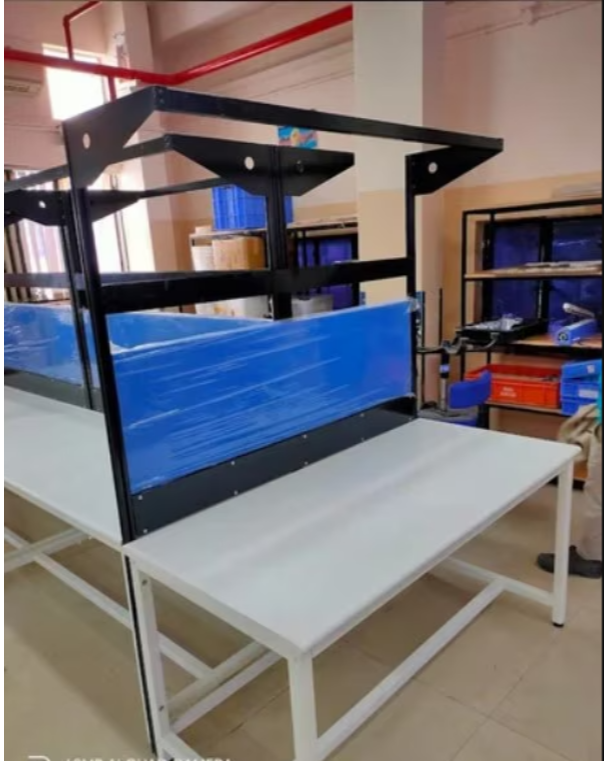
Industrial tables may require additional functional elements such as:
- Drawers
- Tool storage
- Shelves
- Component bins
- Electrical points
- Equipment mounting provisions
- Lighting arrangements
- Footrests
- Document holders
Planning these elements together can produce a more organised station than adding unrelated accessories later.
Evaluate the Working Environment
Manufacturing environments can involve dust, oils, frequent cleaning, metal components, or heavy usage. Surface and structural materials should therefore be selected according to the operating conditions.
Vedika Interior can discuss industrial workstation requirements based on dimensions, usage, storage, and facility-specific needs.
For factories and industrial units in Chakan and the Pune manufacturing belt, readiness before ordering is important. Prepare details about the process, equipment, expected load, available floor area, operator position, storage needs, and required accessories.
The right industrial workstation table is not simply a heavy-duty desk. It is a working platform that should support the operator, equipment, and production process together. Providing the manufacturer with accurate operational information is one of the most effective ways to achieve a practical result.
Keywords