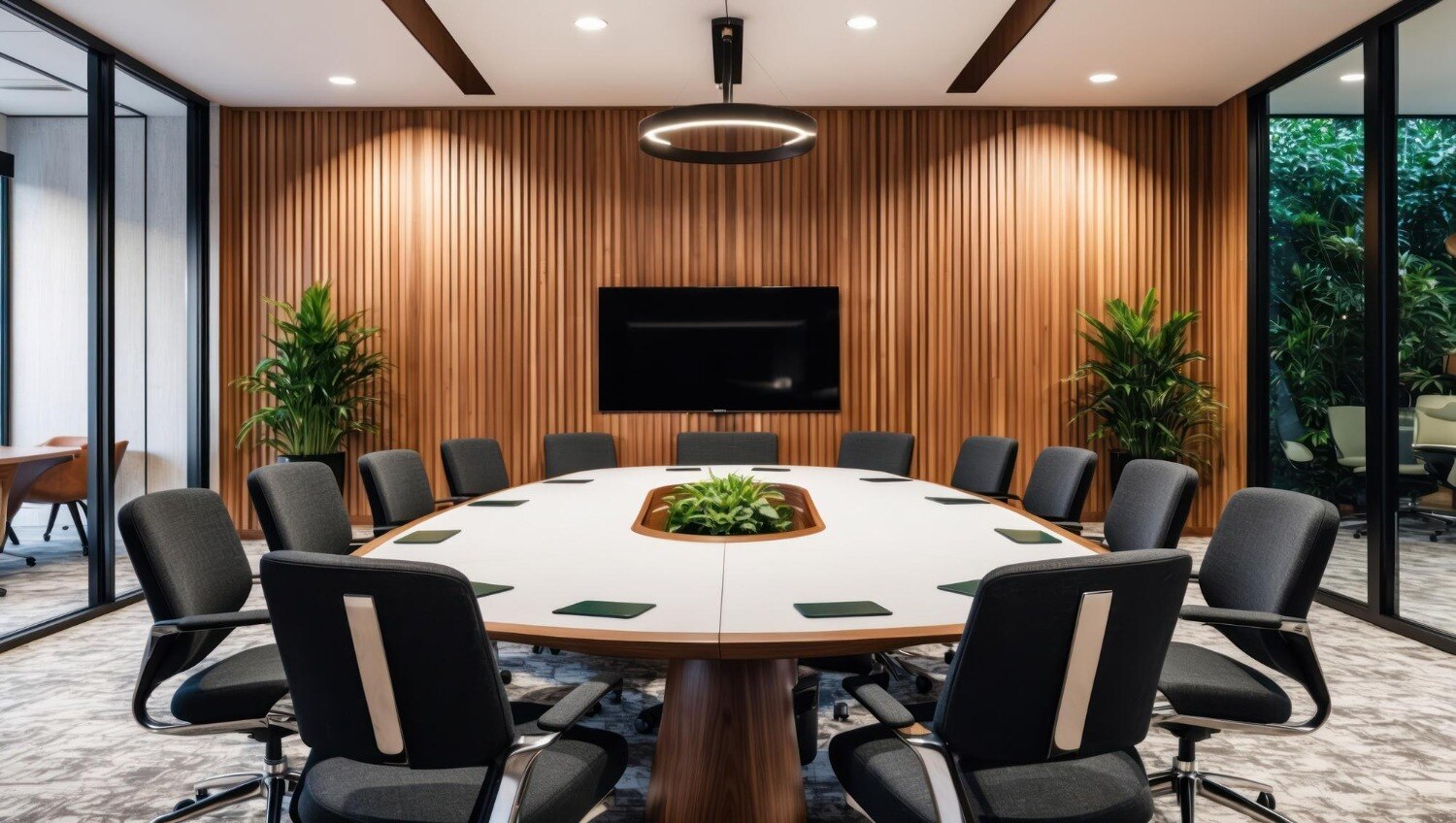
A higher-priced table earns its place only when it reduces replacement, maintenance, downtime, or reconfiguration costs over its service life. By measuring room fit, actual usage, total ownership cost, and construction quality, you can compare a premium table with cheaper alternatives on business value rather than appearance.
Key takeaways
- Match the table to meeting frequency, attendee count, and technology needs.
- Compare purchase price with installation, repairs, replacement, and downtime costs.
- Measure the room, walking clearances, chairs, cable access, and power requirements.
- Choose premium construction when heavier use justifies its longer service life.
Start with the use case, not the finish
A premium office conference table is worth it only when its higher price buys a measurable operating benefit, not merely a heavier top or more executive appearance. Define the room’s workload before comparing finishes, materials, or styles.
Record these inputs:
- Meeting frequency, average attendance, maximum attendance, and hours of weekly use
- Visitor-facing importance and the weight of monitors, microphones, power modules, and other equipment
- Frequency of relocation and the expected service life
- Durability, replaceable parts, reconfiguration capacity, lower downtime, and longer service life
| Use case | Operating pattern | Evidence of value |
|---|---|---|
| High-use client room | Frequent meetings, video equipment, heavy cleaning, long service life | Durable construction, accessible cable channels, replaceable power modules, and lower failure risk can justify the premium |
| Low-use internal room | Infrequent meetings, light equipment, relocation within two years | A standard or folding table may provide better value than premium materials |
| Changing workspace | Regular moves or reconfiguration | Choose a table with replaceable bases, accessible fasteners, and modular components rather than a fixed, heavy design |
Compare the proposed table with disruption costs: cancelled meetings, emergency replacement, installation time, relocation, and disposal. The decision test is direct: is a premium office conference table worth it because the additional price produces a specific operational saving or useful capability? If the answer is no, select the simpler option.
Compare the full cost with lower-cost alternatives
Approve the corporate conference table investment only after pricing its full five- to ten-year ownership period, not its invoice alone. Use one worksheet for every option and record the same cost categories.
| Option | Include in five- to ten-year worksheet | Cost or operational trade-off |
|---|---|---|
| Premium conference table | Purchase price, freight, lift or door handling, assembly, floor protection, cable trays and power modules, electrical and data installation, routine cleaning, repairs, refinishing, relocation, replacement parts, disposal, expected replacement date | Higher entry cost; serviceable parts and lower failure risk can reduce disruption |
| Standard laminate table | Record every category above | Predictable cleaning and lower entry cost; refinishing options and executive-room fit may be limited |
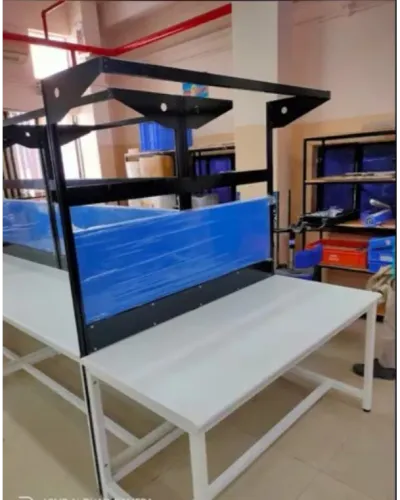
| Folding table | Record every category above, including repeated setup and storage | Rapid reconfiguration; movement can sacrifice rigidity and executive-room fit |
| Benching-table configuration | Record every category above, plus partition or shared-power changes | Uses space efficiently for mixed work and meetings; conversion costs can rise |
| Refurbished conference table | Record every category above, plus inspection and finish repair | Reduces waste and capital cost when parts and finish condition are documented |
Add downtime: cancelled meetings, temporary room hire, emergency purchasing, installation delay, and staff time during a failure or move. Then calculate total ownership cost divided by expected meeting hours or attendee-hours.
This comparison reveals when premium conference table benefits are real. A premium option earns approval when its durability, replaceable components, and lower disruption cost beat simpler alternatives; a low-use room or imminent relocation usually favours laminate, folding, benching, or refurbished furniture.
Prove the table fits the room and the way people work
An office meeting table for business use works in practice only when it fits the delivery route, supports real movement, and leaves enough usable space for equipped participants.
1. Measure the table’s length and width against the doorway, lift car, corridor, and tightest turning point before ordering. A tabletop that fits the room can still be impossible to deliver without removing doors or damaging walls.
2. Draw the room to scale and mark columns, radiators, floor boxes, power points, display position, sprinkler access, and emergency egress routes. Keep circulation clear, and allow space behind occupied chairs for a person to pass; increase that clearance where a route runs behind seated users.
3. Use the manufacturer’s chair-clearance drawing rather than estimating from the tabletop edge. Place chairs at every position and check end seats, corner seats, armrests, pedestal legs, modesty panels, and central supports. These details reduce usable capacity.
4. Test a fully equipped layout by drawing monitors, microphones, notebooks, and personal devices on the tabletop. The stated seat count is not comfortable working capacity if people must share equipment space or move items to make room.
5. Confirm tabletop height, knee clearance, and accessible seating positions. The 2010 ADA Standards generally specify work-surface heights of 28–34 inches, with at least 30 inches of knee-clearance width, 27 inches of height, and 19 inches of depth. A power box, modesty panel, or base can block that clearance even when the tabletop height complies.
6. Reject the order until a person can enter, sit, work, and leave without crossing an egress route or colliding with equipment. Test the arrangement with chairs pulled out, not pushed under the table.
Inspect construction, serviceability, and infrastructure before buying
A thick top alone does not prove durability. Inspect the engineered-core or solid-wood substrate, tabletop thickness, sealed edge treatment, scratch-resistant finish, rigid frame, joint design, levelling feet, and resistance to wobble or sagging. Premium conference table benefits depend on surviving leaning, equipment loads, impacts, relocation, and cable cut-outs.
Use this inspection checklist:
- Request ANSI/BIFMA X5.5 test documentation and confirm that the tested configuration matches your loads; reject an unsupported “commercial grade” claim.
- Examine the top-to-base interface for accessible fasteners, reinforcement beneath cantilevers, floor levelling, and a written installation method. Uneven floors, loose fasteners, over-tightening, and repeated moves commonly damage this joint.
- Prefer separately replaceable bases, replaceable edge components, accessible cable channels, and serviceable power modules rather than proprietary electronics that require a new top.
- Confirm circuit capacity, cord routing, service access, outlet and data-module compatibility, and responsibility for field electrical work. A tabletop receptacle is not building wiring.
Vedika Interior or any competing supplier should provide drawings, load information, installation scope, spare-part policy, and repair access in writing.
| Inspection point | Evidence to request | Risk exposed |
|---|---|---|
| Substrate and frame | Material specification and load test | Sagging or structural failure |
| Top-to-base joint | Fastener layout and retightening access | Loosening during moves |
| Power and data | Circuit, module, and service details | Unsafe or unserviceable infrastructure |
For a conference table for an executive office, FSC covers forestry and chain of custody; UL GREENGUARD addresses emissions. Neither proves structural life or repairability.
Related products
 | Office Conference Table Premium Office Conference Table Manufacturer in Pune — Elevate Your Boardroom A Premium Office Conference Table is more than just a piece of furniture — it’s the centerpiece of your... View product → |
 | Office Conference Table Manufacturer in Pune – Defining Style, Comfort, and Performance Premium Conference Tables are the foundation of productive meetings and impactful... View product → |
Turn room use and service life into a final yes-or-no decision
Annual attendee-hours = meeting hours per week × operating weeks × average attendees. For example, 12 hours × 48 weeks × 8 attendees equals 4,608 attendee-hours. Divide each option’s total ownership cost by that figure, then divide total ownership cost by the years the room will remain in its current configuration.
Compare the options on the same basis:
| Option | Stronger case when | Main reason to reject |
|---|---|---|
| Premium table | Client-facing, heavily used, video-enabled, equipment-heavy | Proprietary electronics require replacing the entire top |
| Standard laminate | Regular internal meetings and predictable cleaning | Limited serviceability or reconfiguration |
| Folding, benching, or refurbished table | Low use, flexible layouts, or a near-term move | Poor rigidity, fit, condition, or working comfort |
Add purchase, delivery, installation, electrical and data work, cleaning, repairs, replacement parts, relocation, downtime, and disposal. Give extra weight to repeated cleaning, high equipment loads, frequent video meetings, and a costly failure that could cancel meetings.
Do not treat the tabletop as the acoustic solution. A large hard surface reflects sound, but ceiling, walls, floor, furniture, and absorption treatment determine speech intelligibility in video calls.
Approve the premium table when documented durability, accessible repairs, replaceable modules, proper fit, and lower disruption cost beat the alternatives. Otherwise, choose the simpler table and spend the difference on power coordination, chairs, lighting, or acoustic treatment.
Frequently asked questions
When is a premium office conference table worth it for a business?
It is worth considering when frequent meetings, heavy daily use, technology requirements, or a long service life justify the higher total cost.
What should you compare besides the purchase price?
Compare delivery, installation, cable and power infrastructure, maintenance, repairs, replacement time, and disruption caused by failure.
How do you prove a conference table fits the room?
Measure the room, doorways, lift access, table footprint, chair clearance, circulation paths, and space for power and data connections.
What construction details should you inspect before buying?
Inspect the worktop, edge treatment, base stability, joints, fasteners, cable management, replacement parts, warranty terms, and service arrangements.
Related products
 | Office Conference Table Executive Office Conference Table Manufacturer in Pune – Where Leadership Meets Design An Executive Office Conference Table is the centerpiece of a professional meeting space,... View product → |
 | Office Conference Table Manufacturer in Pune – Timeless Elegance for Professional Spaces A Wooden Conference Table brings warmth, sophistication, and authority to any... View product → |
Keywords