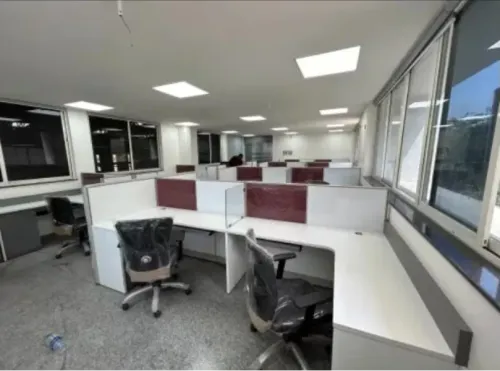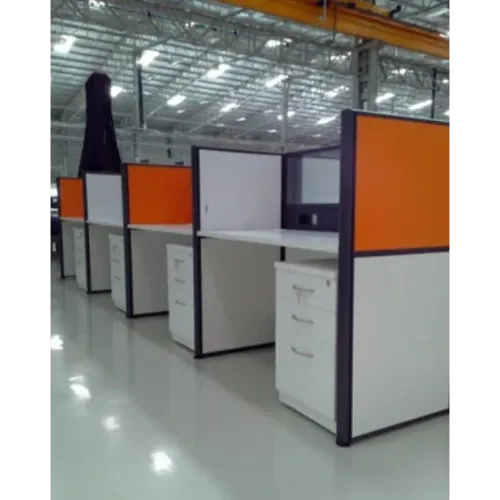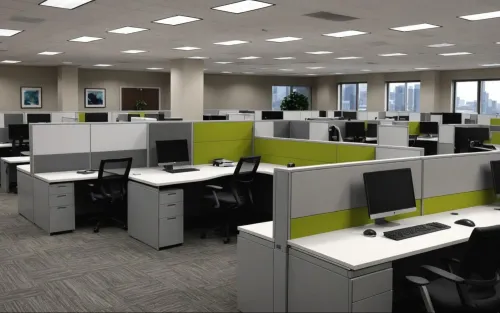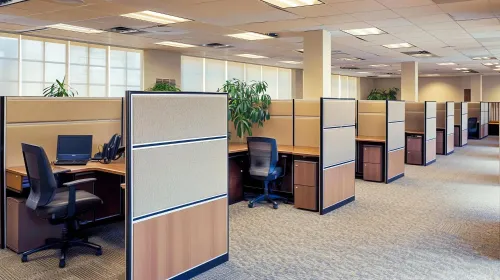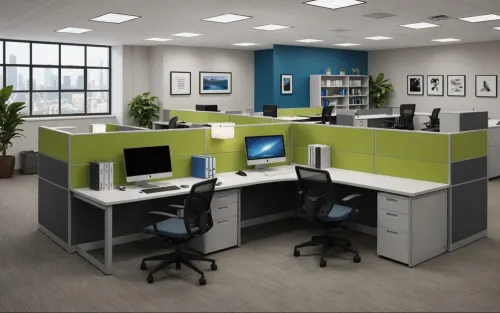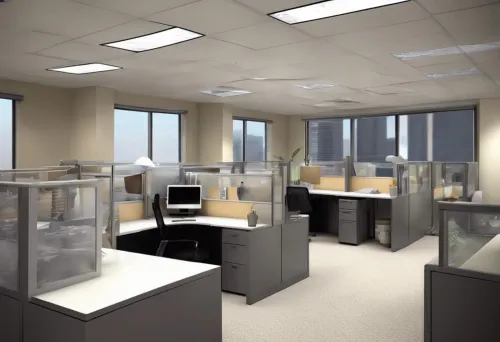
Straight workstation arrangements remain common because they can create organised seating without introducing unnecessarily complex furniture configurations. However, getting good results from a Linear Modular Office Cubicle Manufacturer requires understanding where linear planning works well and where another layout may be more appropriate.
In Baner, Pune, where offices can range from compact professional spaces to larger corporate workplaces, linear cubicles are often considered when teams need orderly seating and predictable circulation.
What Is a Linear Cubicle Layout?
A linear configuration generally places employees along straight workstation runs. Depending on the floor plan, workstations can face the same direction, face one another, or form back-to-back arrangements.
The simplicity of the configuration makes it easier to understand how many workstations may fit within a given zone.
Linear cubicles can work particularly well for:
- Customer support teams
- Sales departments
- Back-office operations
- Administrative teams
- Shared service departments
- IT and technology teams
- Training or project areas
The arrangement is especially practical when individual employees have broadly similar workspace requirements.
Consistency Can Improve Planning
When workstation dimensions remain consistent, furniture planning becomes more predictable. Businesses can estimate seating capacity, passage requirements, electrical distribution, and departmental zones more easily.
However, consistency should not mean ignoring ergonomics. Desk depth should accommodate the equipment employees actually use. Adequate chair clearance should remain available, and frequently used items should be reachable without awkward movement.
Partition height also deserves attention. Teams requiring regular communication may prefer lower visual barriers, while roles requiring concentration may benefit from greater separation.
Consider the Entire Row as a System
A workstation row should not be treated as a collection of independent desks.
Power and data cables may need to serve multiple employees. CPU holders, storage units, monitor positioning, and cable-management channels should therefore be coordinated across the complete configuration.
This is also where modular planning becomes useful. If a department grows, additional compatible units may be easier to integrate when the original system has been planned with expansion in mind.
For businesses evaluating office furniture in Baner and wider Pune, Maharashtra, Vedika Interior can consider the workstation layout in relation to employee numbers, available floor dimensions, and functional requirements.
Linear modular cubicles are most effective when they create order without making employees feel unnecessarily compressed. Before selecting a configuration, measure usable space, understand the equipment requirements of each role, and consider how people will move through the workplace throughout the day.
Keywords