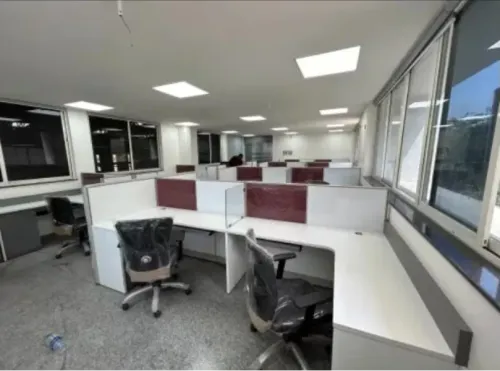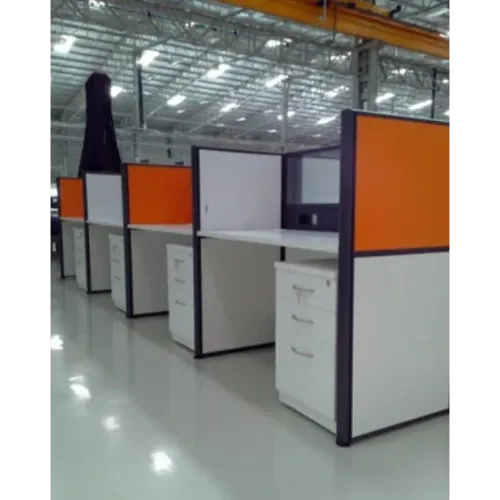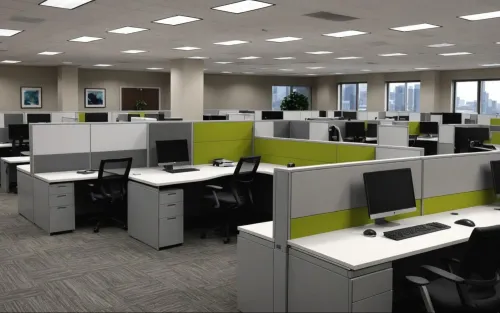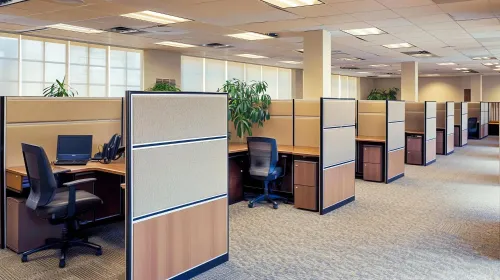
Designing a productive office starts with choosing the right workstation layout. While furniture style often gets the spotlight, the arrangement of workstations can have an even greater impact on employee collaboration, movement, privacy, and overall efficiency. One of the most popular choices among growing businesses is the linear office workstation, known for its clean design and excellent space utilization.
If you're setting up a new office or upgrading an existing workspace in Pimpri-Chinchwad, understanding how linear office workstations compare with cluster layouts can help you make a better long-term investment.
What Is a Linear Office Workstation?
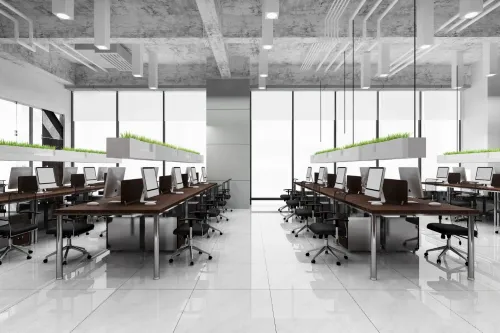
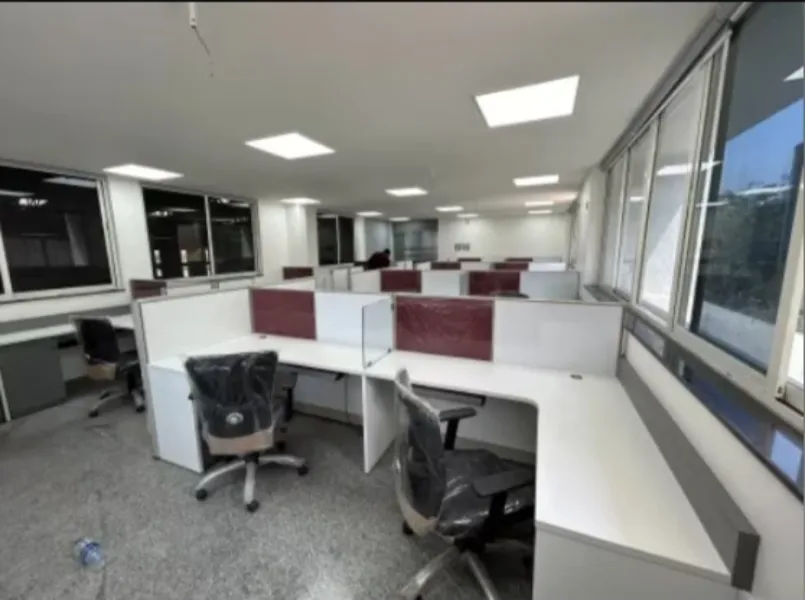
A linear office workstation is a series of desks arranged in a straight line, with employees seated side by side. Depending on the office layout, workstations may face the same direction or opposite directions with partitions in between.
This configuration is commonly used in:
- IT companies
- Customer support centres
- Administrative offices
- Corporate departments
- Educational institutions
- Engineering firms
- Government offices
Its structured design allows businesses to accommodate more employees without making the office feel congested.
Understanding Cluster Workstations
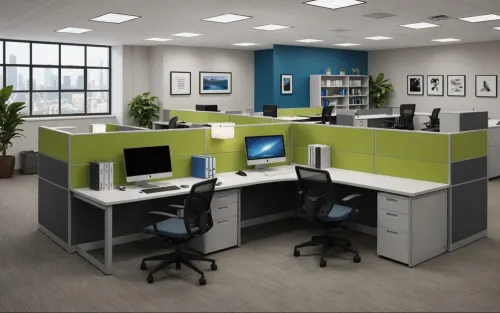
Cluster workstations group multiple employees together, usually in four-person, six-person, or eight-person configurations.
They work well for departments that require constant interaction, brainstorming, or collaborative project work. However, they may also create more distractions if not planned carefully.
Linear vs. Cluster: A Practical Comparison
Space Efficiency
Linear workstations make excellent use of narrow office spaces and rectangular floor plans. They help maintain clear walkways and improve accessibility.
Cluster layouts require more central floor space and are generally better suited for larger offices with open floor plans.
Employee Focus
Linear seating naturally reduces visual distractions. Employees can concentrate better while still being accessible to colleagues when needed.
Clusters encourage frequent communication, which benefits collaborative teams but may reduce focus for roles involving detailed or analytical work.
Expansion Possibilities
Businesses planning future growth often find linear workstations easier to extend. Additional units can be installed without redesigning the entire office.
Cluster layouts sometimes require more extensive rearrangement when new employees are added.
Maintenance and Cable Management
Linear office workstation systems generally offer simpler cable routing and easier maintenance because electrical and networking lines follow a straightforward path.
This also makes future upgrades less disruptive.
Industries That Benefit Most from Linear Workstations
A linear office layout is particularly suitable for:
- Manufacturing company offices
- Finance departments
- Human resource teams
- Back-office operations
- Data entry centres
- Software development teams
- Customer documentation departments
These environments typically require employees to remain focused while maintaining an organized workspace.
Features Worth Considering
When selecting a linear office workstation manufacturer, look for features that improve both functionality and durability.
These include:
- Modular construction
- Sturdy metal framework
- Scratch-resistant laminated surfaces
- Integrated cable management
- Personal storage cabinets
- Ergonomic desk height
- Acoustic partition panels
These features improve the overall user experience while reducing maintenance over time.
Planning the Right Layout
Before placing an order, evaluate your office carefully.
Ask yourself:
- How many employees will use the workstations?
- Will departments expand within the next few years?
- Do employees require storage drawers?
- Is privacy more important than collaboration?
- How much natural light reaches the workspace?
- Where are electrical and network connections located?
Answering these questions early helps avoid expensive modifications later.
Why Businesses in Pimpri-Chinchwad Prefer Modular Workstations
Pimpri-Chinchwad continues to attract manufacturing, engineering, automotive, and technology companies that require adaptable office infrastructure. As businesses grow, office furniture should support changing team sizes without requiring a complete redesign.
Modular workstation systems allow organizations to rearrange departments, add employees, or modernize interiors while keeping disruption to a minimum.
Companies such as Vedika Interior work with businesses across Pimpri-Chinchwad to manufacture customized linear office workstations that suit available space, operational requirements, and future expansion plans. Choosing a manufacturer that combines thoughtful design with durable materials can help create a workplace that remains functional for years to come.
Keywords